Best Treatment for Acne Scars: Custom Resurfacing vs Microneedling vs Chemical Peels
Acne scars are commonly classified as ice pick, boxcar, or rolling scars. Laser resurfacing, microneedling, and chemical peels may improve selected scars, but suitability, results, downtime, and risks vary. Combination treatment may be considered as part of an individualized plan.

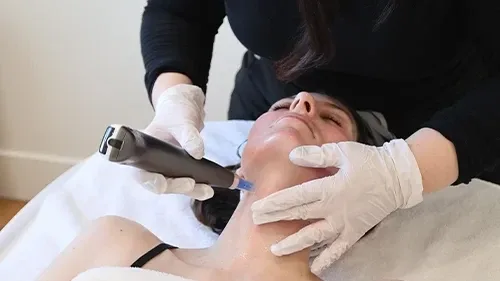
Acne scars are a frustrating reminder of past breakouts. You survived the acne itself, but now you're left with visible reminders: pitted scars, boxcar indentations, or rolling depressions that catch the light at certain angles.
The good news: acne scars are among the most treatable skin concerns. Unlike active acne, scars may be addressed with several treatment approaches, depending on scar type and skin tone.
The challenge: choosing the right one. Should you go with Custom Resurfacing? Microneedling? Chemical peels? Or a combination?
This guide breaks down the most effective acne scar treatments based on clinical evidence and helps you understand which option is best for your specific type of scarring.
Understanding Acne Scar Types
Not all acne scars are the same, and treatment depends on what you're dealing with.
Traditional classification of atrophic acne scars includes 3 main types: (1) ice pick scars, (2) boxcar scars, and (3) rolling scars.[1]
Ice Pick Scars
Narrow, deep indentations that look like a tiny hole was poked in the skin. They can be challenging to treat because of their depth and narrow shape.
Boxcar Scars
Wider, angular depressions with sharply defined edges, similar to the marks left by chickenpox. Treatment response depends on their depth and shape.
Rolling Scars
Sloped, rounded edges that give the skin a wavy appearance. They may respond well to treatments that stimulate collagen or release the fibrous bands beneath the scar.
You might also have raised scars (hypertrophic or keloid scars), which are thickened, raised tissue rather than depressed indentations. Treatment for raised scars is different from atrophic scarring.
Custom Resurfacing
Custom Resurfacing uses controlled energy to target damaged skin and stimulate the body's wound-healing response, encouraging new collagen and smoother-looking skin.[1]
Fractional ablative lasers such as 2,940 nm Erbium Yttrium Aluminium Garnet (Er:YAG) lasers and carbon dioxide (CO2) lasers are the most used treatments for atrophic acne scars, with most ablative studies reporting 26% to 75% improvements.[2]
How It Works
Custom Resurfacing creates controlled treatment zones in scarred skin. As your skin heals, it produces new collagen and elastin, which can soften depressions and improve surface texture.
Resurfacing treatments may be ablative or non-ablative. Your SKIN Clinics provider will determine which approach may suit your skin type and the nature of your acne scars.[1]
Ablative lasers (like CO2 and Er:YAG) remove the outer layer of skin entirely. They produce the most dramatic results but require longer downtime (1-2 weeks of visible peeling and redness).
Non-ablative lasers don't remove the outer layer of skin, so they have minimal downtime but also produce more subtle results. You typically need multiple sessions.
Results & Downtime
As your skin heals after Custom Resurfacing, it produces collagen and elastin, which can diminish the appearance of scars. Treatment settings and the number of sessions vary according to the device, scar type, skin tone, and individual plan.[1]
Best for: Selected boxcar and rolling scars; moderate scarring; patients who can accommodate recovery time. Deep ice pick scars may require other targeted techniques.
Downtime: Varies by laser type and treatment intensity; ablative procedures generally require more recovery than non-ablative treatments.
Considerations
This approach has an increased risk of side effects for people with darker skin or a history of keloids.[1] If you have darker skin, discuss resurfacing options carefully with your dermatologist, as the risk of post-inflammatory hyperpigmentation is higher.
Microneedling: Suitable for a Range of Skin Tones
Microneedling uses tiny needles to create controlled micro-injuries in scarred skin. This stimulates the body to produce new collagen and elastin, which may help diminish acne scars.[1]
Microneedling was ranked as the most tolerable in terms of pain.[2]
How It Works
The tiny needle punctures create controlled micro-injuries that trigger your body's natural healing response. Your skin responds by producing collagen, which gradually fills in scarred areas and smooths the surface.
Microneedling is safe for all skin tones.[1] A professional assessment is still important because treatment settings, scar type, and individual risk factors must be considered.
Results & Downtime
Microneedling commonly requires a series of treatments, but the number varies according to scar type, severity, and response. Your dermatologist may also combine treatments when appropriate. Redness and mild swelling can occur and may persist for several days.[1]
Best for: A range of skin tones; selected rolling and boxcar scars; patients seeking less downtime than ablative laser resurfacing.
Downtime: Usually limited, although redness and sensitivity can persist for several days.
Enhanced Results
To improve results for selected patients, microneedling may be combined with radiofrequency, chemical peeling, platelet-rich plasma, PDRN, or exosomes.[1][5]
Combining microneedling with another procedure may improve results for selected patients, depending on the scar type and treatment plan.[1][5]
Chemical Peels
Chemical peeling is a traditional treatment for acne scars and its effectiveness has been reported in clinical literature.[2][4] Treatment comfort and recovery vary with the peel type and depth.
How It Works
Chemical peels use carefully selected solutions to remove or exfoliate layers of damaged skin. As the skin renews, its surface may appear smoother and selected scars may become less noticeable.[1]
The depth and type of peel determine how much skin is treated and how much recovery is expected.
Results & Downtime
You can repeat mild and medium peels to maintain results. You can have only one deep peel. Potential side effects include changes in skin color, especially with deep peels used on dark skin.[1]
Best for: Selected superficial scars, uneven tone, and texture concerns. TCA CROSS may be considered for selected ice-pick scars following a professional assessment.[4]
Downtime: 3-7 days of visible peeling and redness (depending on peel strength).
Consideration
Like laser, chemical peels carry higher risk of post-inflammatory hyperpigmentation on darker skin, especially with deeper peels, so careful treatment selection is important.
Treatment Comparison: What Works Best?
In one network meta-analysis, laser plus platelet-rich plasma (PRP) ranked best for reducing scar severity, laser plus filler injection ranked best for reducing scar scores, and laser plus chemical peels ranked best for patient satisfaction. Microneedling was ranked as the most tolerable in terms of pain.[2]
Key insight: Resurfacing combined with other therapies may be considered for selected acne scars as part of an individualized plan.[2]
The findings suggest that certain combination approaches may offer advantages for selected outcomes, but treatment should remain individualized.[2]
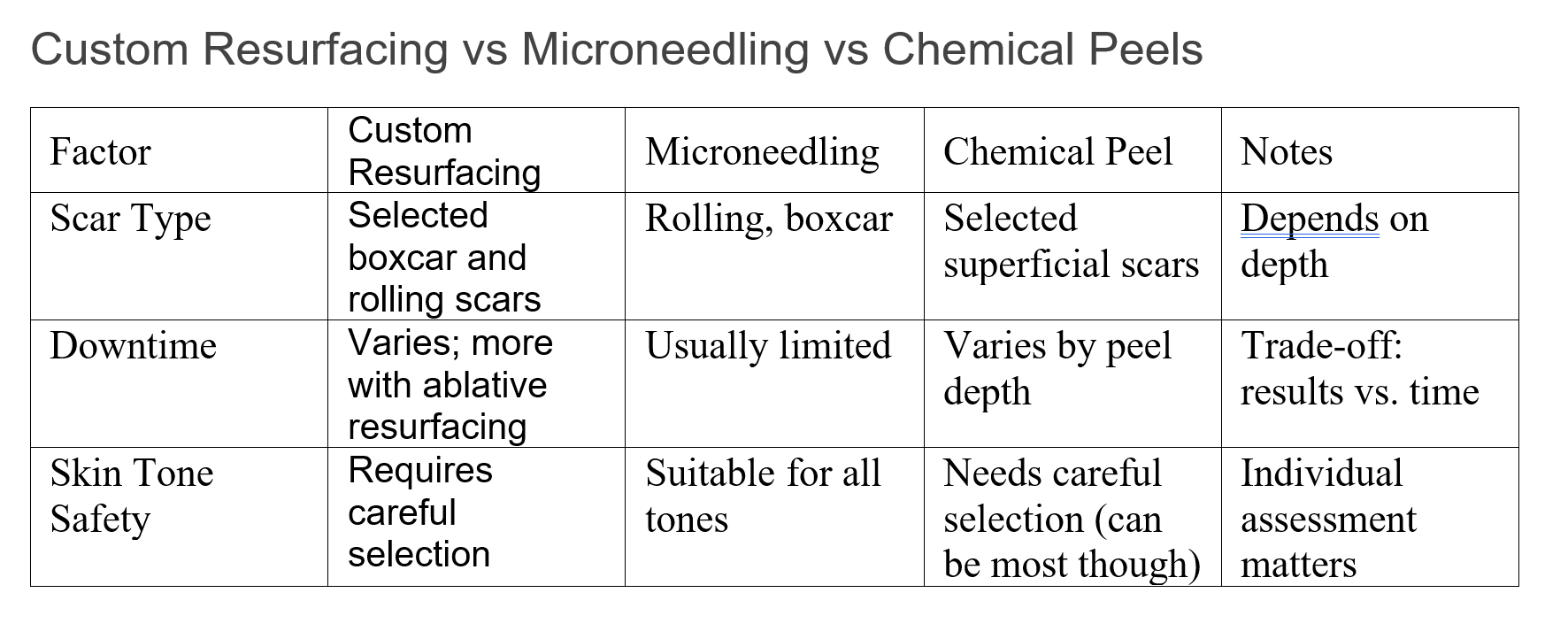
Custom Resurfacing vs Microneedling vs Chemical Peels
Factor
Custom Resurfacing
Microneedling
Chemical Peel
Notes
Additional Treatment Options
Subcision: This treatment uses a needle to break apart fibrous bands that pull down scar tissue into the lower levels in your skin. The skin is released so that it can return to the surface and can lay smooth naturally.[1]
Dermal fillers: This treatment adds volume to depressed scars. Fillers can also help your body produce more collagen and elastin to fill in the scars. Most fillers give temporary results, ranging from 3 months to 2 years.[1]
Scar revision: SKIN Clinics offers non-surgical scar-revision options. Your provider can assess whether Custom Resurfacing, microneedling, chemical peels, PRP, PDRN, exosomes, or another approach is appropriate for your scar type.
What to Expect: Setting Realistic Expectations
An acne scar can diminish by as much as two-thirds after treatment, though no treatment will make scarred skin look perfect again.[3]
Treatment can make acne scars less noticeable, sometimes substantially, but it cannot guarantee perfectly smooth or scar-free skin.
The timeline: Results aren't immediate. As your skin heals after treatment, you'll see gradual improvement over weeks and months as new collagen forms.[2]
Choosing Your Treatment
Here's how to think about your options:
Start with a consultation with a medical aesthetician. Selecting an acne-scar treatment is challenging because several factors need to be considered, including the type and number of scars, Fitzpatrick skin type, and the amount of downtime you can accommodate.[1]
Your medical aesthetician will assess:
Your specific scar types (ice pick, boxcar, rolling); The severity and number of scars; Your skin tone and risk of hyperpigmentation; How much downtime you can tolerate; Your budget and realistic expectations.
Consider combination therapy. In one network meta-analysis, laser plus PRP ranked highest for one scar-severity measure, while laser plus chemical peeling ranked highest for patient satisfaction.[2]
For some patients, combining carefully selected modalities may improve results compared with relying on one procedure alone.[1][2]
Plan for multiple sessions. Whether you choose Custom Resurfacing, microneedling, or chemical peels, you may need multiple treatments. Your provider may use more than one type of treatment, depending on your needs. For instance, selected scars may be treated with resurfacing and others with microneedling.[1]
Before Treatment: Preparation Matters
Proper skin care before and after treatment helps you see the best results from treatment. You'll also need to protect your skin from the sun before getting a chemical peel. Doing so helps prevent discolored skin from developing after treatment.[1]
Preparation typically includes:
Stopping certain skincare products (like retinoids); Using sunscreen daily; Avoiding sun exposure; Staying hydrated; Following your provider's specific pre-treatment instructions.
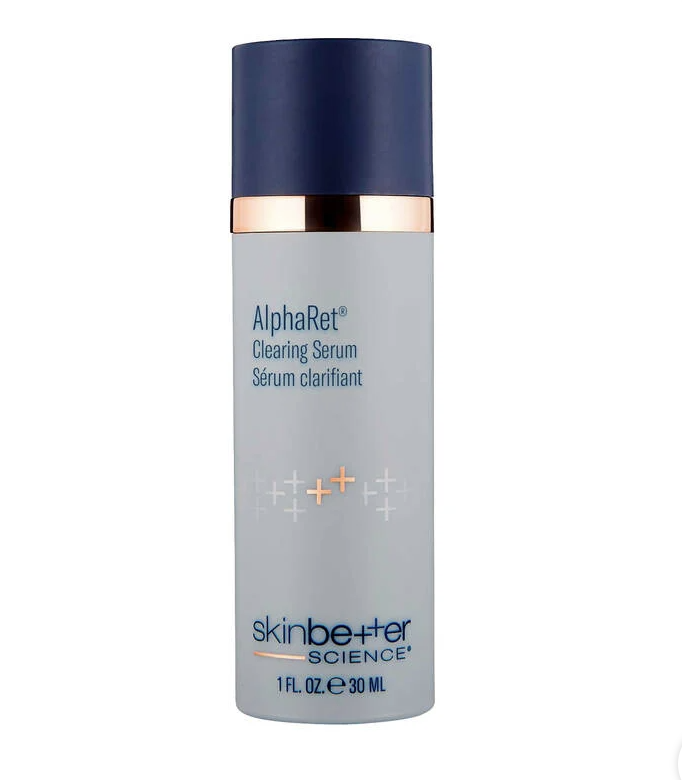
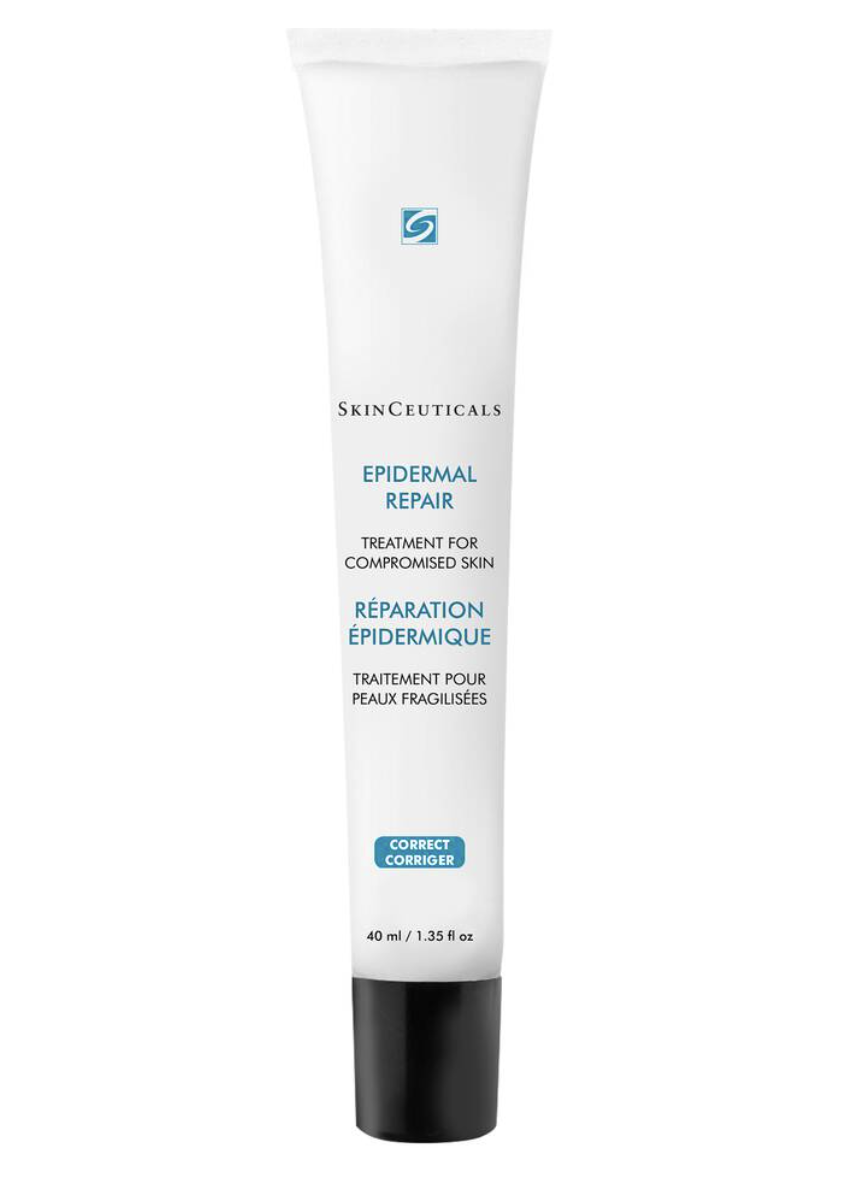
Explore Gentle Cleanser, Epidermal Repair, and Physical Fusion SPF 50 for suitable home-care options.
Explore professional acne-scar options including Custom Resurfacing, Microneedling, PRP Facial Treatment, PDRN and Exosomes, TCA Peel, or Custom Pro Peel at SKIN Clinics.
The Bottom Line
Treatment options for acne scarring include resurfacing treatments, chemical peels, microneedling, dermal fillers, and platelet-rich plasma (PRP).[1]
The best acne scar treatment for you depends on your specific scars, skin tone, downtime tolerance, and goals. Resurfacing combined with other therapies may be considered as part of an individualized treatment plan.[1][2]
Book a complimentary consultation with a medical aesthetician to develop a personalized treatment plan. Results vary, but professional treatment may make acne scars less noticeable over time.
Quick Takeaways
There are three main types of acne scars: ice pick, boxcar, and rolling scars[1]; Custom Resurfacing may improve selected scars, with downtime depending on the treatment type and intensity[1][2]; Microneedling can be used across a range of skin tones and commonly requires a series of treatments[1][5]; Chemical peels may help selected superficial scars, while TCA CROSS may be considered for selected ice-pick scars[1][4]; Combination approaches may be recommended for some patients[1][2]; Realistic expectation: scars may improve but will not disappear completely[3]; Treatment timelines vary by scar type, procedure, and treatment plan; Skin tone matters: darker skin requires careful resurfacing and peel selection because of hyperpigmentation risk.
References
[1] American Academy of Dermatology (AAD). "Acne Scars: Diagnosis and Treatment." Accessed July 2026. https://www.aad.org/public/diseases/acne/derm-treat/scars/treatment
[2] PubMed Central (NIH). "Optimal treatment options for acne scars in patients with historic acne: a systematic review and network meta-analysis." Published 2025. https://pmc.ncbi.nlm.nih.gov/articles/PMC12515001/
[3] Cleveland Clinic. "How To Get Rid of Acne Scars: 11 Solutions." Accessed July 2026. https://health.clevelandclinic.org/how-to-get-rid-of-acne-scars
[4] Gupta S, Sharma VK. “Evidence-based Surgical Management of Post-acne Scarring in Skin of Color.” Journal of Cutaneous and Aesthetic Surgery. 2020. https://pmc.ncbi.nlm.nih.gov/articles/PMC7394107/
[5] Attia E, et al. “Atrophic Postacne Scar Treatment: Narrative Review.” JMIR Dermatology. 2024. https://derma.jmir.org/2024/1/e49954
The skincare we recommend.
Personalised skin guidance
Book a complimentary consultation with a SKIN Clinics specialist to build a routine tailored to your goals.