How to Get Rid of Age Spots: Complete Treatment Guide
Age spots (solar lentigines) are a permanent record of sun exposure that won't fade without treatment. This guide breaks down the full range of options, from topical creams to IPL, what the clinical evidence says about each, and how to build a plan that keeps results lasting.

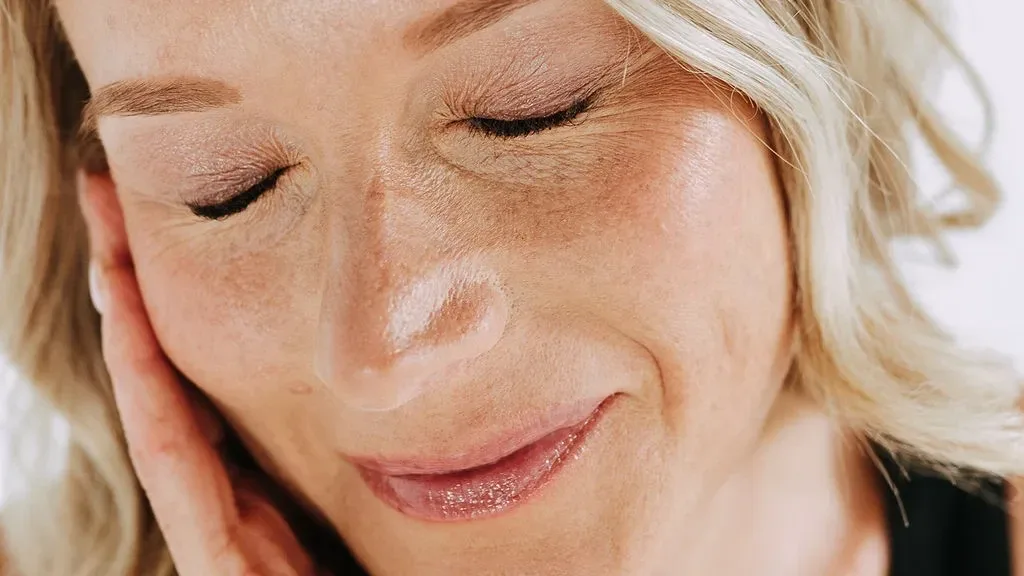
You notice them first on the backs of your hands, or maybe across your cheeks and forehead: flat brown patches that weren't there a few years ago. They're not painful. They're not dangerous, at least not usually. But they age your skin in photos, in mirrors, in a way that makes you look tired even on a good day.
Age spots are one of the most common skin concerns people bring to a dermatology clinic, and also one of the most over-explained online. Everyone has a miracle cream. Few explain what actually works, in what order, and why. Here's the complete picture.
What Age Spots Actually Are
Age spots, also called sun spots or solar lentigines, are flat, tan-to-brown patches that form after years of cumulative sun exposure. They show up most often on the hands, face, shoulders, and chest, the areas that spend the most time exposed to UV light over a lifetime.
The Cleveland Clinic describes hyperpigmentation, the broader category age spots fall under, as the result of skin cells producing too much melanin, which then clumps together and makes that patch of skin appear darker than the skin around it. Age spots themselves are harmless. They're essentially a visible record of sun exposure your skin has already absorbed.
That said, not every brown spot is an age spot. The American Academy of Dermatology (AAD) recommends seeing a board-certified dermatologist before starting any treatment, since other spots, including some forms of skin cancer, can look similar to a true age spot in the early stages. Getting an accurate diagnosis first isn't just a formality; it's the difference between treating a cosmetic concern and catching something serious early. [1]
Why Age Spots Don't Just Fade on Their Own
Once melanin has clumped into a visible spot, your skin doesn't typically clear it through normal turnover the way it fades a bruise or a scrape. Mayo Clinic notes that true age spots don't require treatment for health reasons, but they also don't resolve without some form of intervention if you want them to fade. [2]
This is why the “just wait it out” approach rarely works. The spot formed because of damage that's already been done. Reducing its visibility takes actively targeting the pigment.
Treatment Options, From Mildest to Most Effective
At-Home and Topical Options
Over-the-counter and prescription creams, typically containing ingredients like hydroquinone, retinoids, or vitamin C, can gradually lighten age spots over the course of several weeks to months. The AAD notes that prescription-strength lightening creams tend to be more effective than over-the-counter versions, though both require consistent daily use to see a difference. [1]
This route works, but slowly, and it plateaus. For spots that are already established or widespread, topical treatment alone usually isn't enough to get the level of improvement most people are hoping for.
In-Office Procedures
This is where meaningful, faster improvement happens. The AAD lists intense pulsed light (IPL) treatment, chemical peels, and dermabrasion among the professional procedures used to reduce or remove age spots, noting that IPL and similar light-based treatments work by targeting melanin directly to break up the pigment. [1]
A 2025 systematic review of 41 clinical trials involving more than 3,200 patients with solar lentigines compared these professional treatment categories directly. IPL performed particularly well, with reported success rates between roughly 75 and 90 percent across the studies reviewed, and the review's authors concluded that laser and light-based therapies generally outperformed topical treatments and were associated with a lower risk of the skin darkening further after treatment. [3]
How IPL Works for Age Spots
At SKIN Clinics, IPL (Intense Pulsed Light) is the primary in-office treatment for age and sun spots. It uses multiple wavelengths of light to target the melanin responsible for the visible pigment, breaking it up so the treated area gradually darkens, then flakes away over the following week as the skin heals.
A typical IPL session takes about 30 minutes, with minimal downtime, which is part of why it fits easily into a lunch break. Most patients are recommended a series of 3 to 6 treatments, spaced 4 to 6 weeks apart, for the best result. Because IPL cannot safely be performed over tanned skin, treatment series are generally scheduled during the fall and winter months.
When Combination Treatment Makes Sense
Not every case of pigmentation responds to IPL alone, and SKIN Clinics' own approach to hyperpigmentation reflects that. Depending on the type, depth, and cause of the pigmentation, a provider may recommend IPL alongside chemical peels, microneedling, or medical-grade skincare to support and extend results. Melasma, acne-related pigmentation, and long-standing sun damage don't all behave the same way, so an accurate diagnosis at your consultation shapes which combination, if any, makes sense for you.
What Results Look Like, and How Long They Last
Improvement from IPL is often visible within about a week of a session, as the treated pigment rises to the surface and flakes off. But full results build across the recommended series rather than after a single treatment.
Age spots that have faded can return. Sun exposure, hormonal changes, and inflammation can all trigger new pigmentation over time, which is why daily sun protection and a maintenance skincare routine matter just as much as the initial treatment series. Mayo Clinic and the AAD are consistent on this point: prevention through consistent broad-spectrum SPF is the single most effective way to protect the results you've already paid for. [1][2]
Who Is a Good Candidate for Age Spot Treatment?
You may be a good candidate for IPL or another in-office pigmentation treatment if you:
Have flat, brown, sun-related spots on the hands, face, chest, or shoulders
Have already had any concerning or changing spots evaluated by a provider
Are able to avoid sun exposure and tanning for 4 to 6 weeks before treatment
Are not currently pregnant or breastfeeding
Are prepared for a series of treatments rather than a single session
A consultation is the appropriate first step, both to confirm your spots are cosmetic rather than something requiring closer medical attention, and to determine which treatment or combination fits your skin.
Why Choose SKIN Clinics for Age Spot Treatment
SKIN Clinics is the largest dermatologist-owned group of medical and cosmetic dermatology clinics in Canada, with locations in Calgary, Winnipeg, Regina, Brandon, and Steinbach. Because pigmentation can have more than one cause, from sun damage to melasma to post-acne marks, having IPL, chemical peels, microneedling, and medical-grade skincare available under one roof means your provider can build and adjust your plan as your skin responds, rather than guessing with a single tool. (Book a consultation at a SKIN Clinics location near you)
Quick Takeaways
Age spots are flat, sun-related pigment patches that don't fade on their own once formed.
See a provider first. Some spots that look like age spots warrant closer medical attention.
At-home creams work slowly and plateau; in-office treatments produce faster, more complete results.
IPL is the most studied and typically most effective professional option, with clinical success rates reported between roughly 75 and 90 percent across reviewed trials.
SKIN Clinics typically recommends 3 to 6 IPL sessions spaced 4 to 6 weeks apart, usually scheduled in fall or winter.
Combination treatment (IPL plus peels, microneedling, or skincare) may be recommended depending on the type and cause of your pigmentation.
Daily SPF is essential for protecting results, since sun exposure and hormonal changes can trigger new spots over time.
Clinical References
[1] American Academy of Dermatology. How to Get Rid of Age Spots. — https://www.aad.org/public/cosmetic/age-spots-marks/get-rid-spots
[2] Mayo Clinic. Age Spots (Liver Spots): Diagnosis and Treatment. — https://www.mayoclinic.org/diseases-conditions/age-spots/diagnosis-treatment/drc-20355864
[3] Mardani G, Nasiri MJ, Namazi N, Farshchian M, Abdollahimajd F. Treatment of Solar Lentigines: A Systematic Review of Clinical Trials. Journal of Cosmetic Dermatology, 2025;24(4):e70133. — https://pmc.ncbi.nlm.nih.gov/articles/PMC11948172/
[4] Cleveland Clinic. Hyperpigmentation: What It Is, Causes, and Treatment. — https://my.clevelandclinic.org/health/diseases/21885-hyperpigmentation
Personalised skin guidance
Book a complimentary consultation with a SKIN Clinics specialist to build a routine tailored to your goals.